
What Is GDPR Compliance and Why It Matters for API Integration
Many companies often underestimate just how strict European privacy laws are, yet fines under GDPR can hit a shocking 4 percent of global turnover. For mid-level developers and product managers building APIs, understanding GDPR is more than just a legal hurdle—it shapes how you design, integrate, and scale services. This guide helps you spot common compliance gaps and offers practical strategies to secure user data while keeping API workflows smooth.
01Table of Contents
- GDPR Compliance Explained For Developers
- Key GDPR Principles Affecting APIs
- Types Of Data And API Roles Under GDPR
- Obligations And Risks For API Integrators
- Practical Patterns For GDPR-Compliant API Workflows
02Key Takeaways
| Point | Details |
|---|---|
| GDPR Compliance is Essential | Organizations processing data of European Union residents must adhere to GDPR, or face significant penalties. |
| User Consent is Crucial | Obtaining explicit user consent for data collection and processing is a fundamental requirement of GDPR compliance. |
| Data Security Measures are Mandatory | Developers must embed privacy by design into API architectures, including secure transmission and robust access controls. |
| Continuous Monitoring Required | Ongoing risk assessment and documentation of data processing activities are essential for maintaining compliance. |
03GDPR Compliance Explained for Developers
GDPR represents a complex legal framework that fundamentally transforms how software developers handle personal data across digital platforms. At its core, the General Data Protection Regulation (GDPR) establishes stringent requirements for data privacy, protection, and user consent, specifically targeting organizations processing data of European Union residents.
For API developers, GDPR compliance means implementing robust mechanisms to protect user information throughout the entire data lifecycle. This involves critical considerations such as:
- Obtaining explicit user consent before data collection
- Implementing transparent data processing practices
- Providing clear mechanisms for user data access and deletion
- Ensuring data minimization and purpose limitation
- Maintaining comprehensive data processing records
The regulation's extraterritorial scope means that developers worldwide must understand its implications, regardless of their geographic location. Penalties for non-compliance can reach up to 4% of global annual turnover or €20 million, whichever is higher, making GDPR adherence not just a legal requirement but a significant financial consideration.
Technical implementation of GDPR compliance requires a proactive approach. Developers must design privacy protections directly into their API architectures, including secure data transmission protocols, encryption mechanisms, and granular access controls. This means moving beyond traditional security measures and embedding privacy by design principles into every stage of API development.
Pro Developer Tip: Create a comprehensive data mapping workflow that tracks every point of personal data collection, processing, and storage within your API ecosystem, enabling real-time compliance monitoring and quick response to potential privacy incidents.
04Key GDPR Principles Affecting APIs
GDPR establishes seven fundamental principles that fundamentally reshape how APIs handle personal data, creating a comprehensive framework for digital privacy protection. These principles provide a structured approach to data governance that goes far beyond traditional compliance checkboxes, demanding a holistic reimagining of data processing architectures.
The core GDPR principles impacting API design and implementation include:
- Lawfulness, Fairness, and Transparency: APIs must clearly communicate data collection purposes
- Purpose Limitation: Data can only be collected for specific, explicit, and legitimate purposes
- Data Minimization: Only collect and process personal data absolutely necessary for the intended purpose
- Accuracy: Maintain mechanisms to update, correct, or delete inaccurate personal data
- Storage Limitation: Implement automatic data deletion processes after serving the original purpose
- Integrity and Confidentiality: Protect data through robust security mechanisms
- Accountability: Demonstrate compliance through documented processes and technical controls
Technical implementation of these principles requires developers to build advanced privacy controls directly into their API architecture. This means creating granular consent management systems, implementing real-time data tracking, and developing sophisticated access control mechanisms that enable users to understand, modify, and revoke their data permissions at any moment.
For API developers, navigating these principles is not just about legal compliance, but about building trust with users. Comprehensive data governance frameworks demand a proactive approach that prioritizes individual privacy rights throughout the entire data processing lifecycle.
Pro Developer Tip: Design your API consent flows with granular, explicit opt-in mechanisms that allow users to understand exactly what data is being collected, why it's being collected, and how they can modify or revoke their consent at any time.
05Types of Data and API Roles Under GDPR
GDPR classifies personal data into multiple categories that significantly impact how APIs process and manage digital information. Understanding these data classifications is crucial for developers designing compliant data processing systems, as the regulation imposes different requirements based on data sensitivity and potential individual risk.
The primary categories of personal data under GDPR include:
- Identifying Data: Names, email addresses, phone numbers, physical addresses
- Sensitive Personal Data: Racial/ethnic origin, political opinions, religious beliefs
- Biometric Data: Fingerprints, facial recognition data, genetic information
- Location Data: Geographic tracking information
- Online Identifiers: IP addresses, device identifiers, cookies
GDPR also defines two critical roles in data processing: data controllers and data processors. The distinction between these roles is fundamental to understanding API data governance responsibilities. Data controllers determine the purposes and means of processing personal data, while data processors handle data processing on behalf of the controller.

For API developers, this means carefully mapping out data flows, understanding the specific legal obligations of each role, and implementing robust mechanisms for data protection, consent management, and user rights. APIs must provide clear mechanisms for data subjects to exercise their rights, including accessing, correcting, and requesting deletion of their personal information.
Here's a quick comparison of API responsibilities as Data Controller vs Data Processor under GDPR:
| Role | Main Responsibility | Typical Examples | Accountability Focus |
|---|---|---|---|
| Data Controller | Decides why and how personal data is used | API platform owner, SaaS provider | Documenting purposes, securing user consent |
| Data Processor | Processes data on behalf of another party | Third-party API integration, cloud provider | Following controller's instructions, security assurances |
Pro Developer Tip: Create a comprehensive data mapping document that clearly identifies your API's role as either a controller or processor, detailing exactly how personal data is collected, processed, stored, and protected throughout its lifecycle.
06Obligations and Risks for API Integrators
API integrators face significant legal and technical challenges in maintaining GDPR compliance, with potential penalties reaching up to 4% of global annual revenue or €20 million. The landscape of API security risks requires comprehensive understanding and proactive management, demanding meticulous attention to data protection strategies.
Key obligations for API integrators include:
- Implementing robust authentication mechanisms
- Establishing granular access controls
- Protecting data during transmission and storage
- Maintaining transparent data processing records
- Enabling user consent and data subject rights
- Conducting regular security and privacy impact assessments
- Documenting all data processing activities
Technical Vulnerabilities pose significant compliance risks, including:
Below is an overview of common technical vulnerabilities and the best countermeasures for GDPR-compliant APIs:
| Vulnerability | Example Impact | Recommended Countermeasure |
|---|---|---|
| Broken Object Level Authorization | Unintended data access | Strict object access checks |
| Excessive Data Exposure | Leaking sensitive attributes | Data filtering at response level |
| Insufficient Logging | Undetected breaches | Implement audit log monitoring |
| Lack of Rate Limiting | API resource exhaustion | Set rate limits per endpoint |
| Improper Asset Management | Untracked endpoints exposed | Maintain updated API inventory |
- Broken object level authorization
- Excessive data exposure
- Lack of resource rate limiting
- Improper asset management
- Insufficient logging and monitoring
Comprehensive compliance requires systematic documentation and ongoing risk assessment, with API integrators required to demonstrate active management of data protection processes. This means developing comprehensive internal policies, conducting regular audits, and maintaining transparent records of all data processing activities.
Pro Developer Tip: Create a comprehensive incident response plan that outlines exact steps for identifying, reporting, and mitigating potential data breaches, ensuring your organization can respond quickly and transparently to any compliance challenges.
07Practical Patterns for GDPR-Compliant API Workflows
Enterprise architecture patterns for GDPR compliance provide systematic frameworks for developers to integrate privacy protections directly into API workflow design. These patterns transform abstract legal requirements into concrete technical implementations that protect user data throughout entire processing lifecycles.
Key workflow patterns for GDPR-compliant API design include:
-
Consent Management Pattern
- Implement granular, explicit consent mechanisms
- Enable easy consent withdrawal
- Maintain comprehensive consent logs
-
Data Minimization Pattern
- Collect only essential data elements
- Implement automatic data truncation
- Define precise data retention periods
-
Purpose Limitation Pattern
- Restrict data usage to original collection purpose
- Create metadata tags for data usage context
- Develop automated compliance tracking
Technical benchmarking frameworks demonstrate how these workflow patterns translate legal requirements into actionable system capabilities, enabling developers to build robust, compliant API architectures. Successful implementation requires a proactive approach that integrates privacy considerations at every architectural layer, from authentication to data storage and transmission.
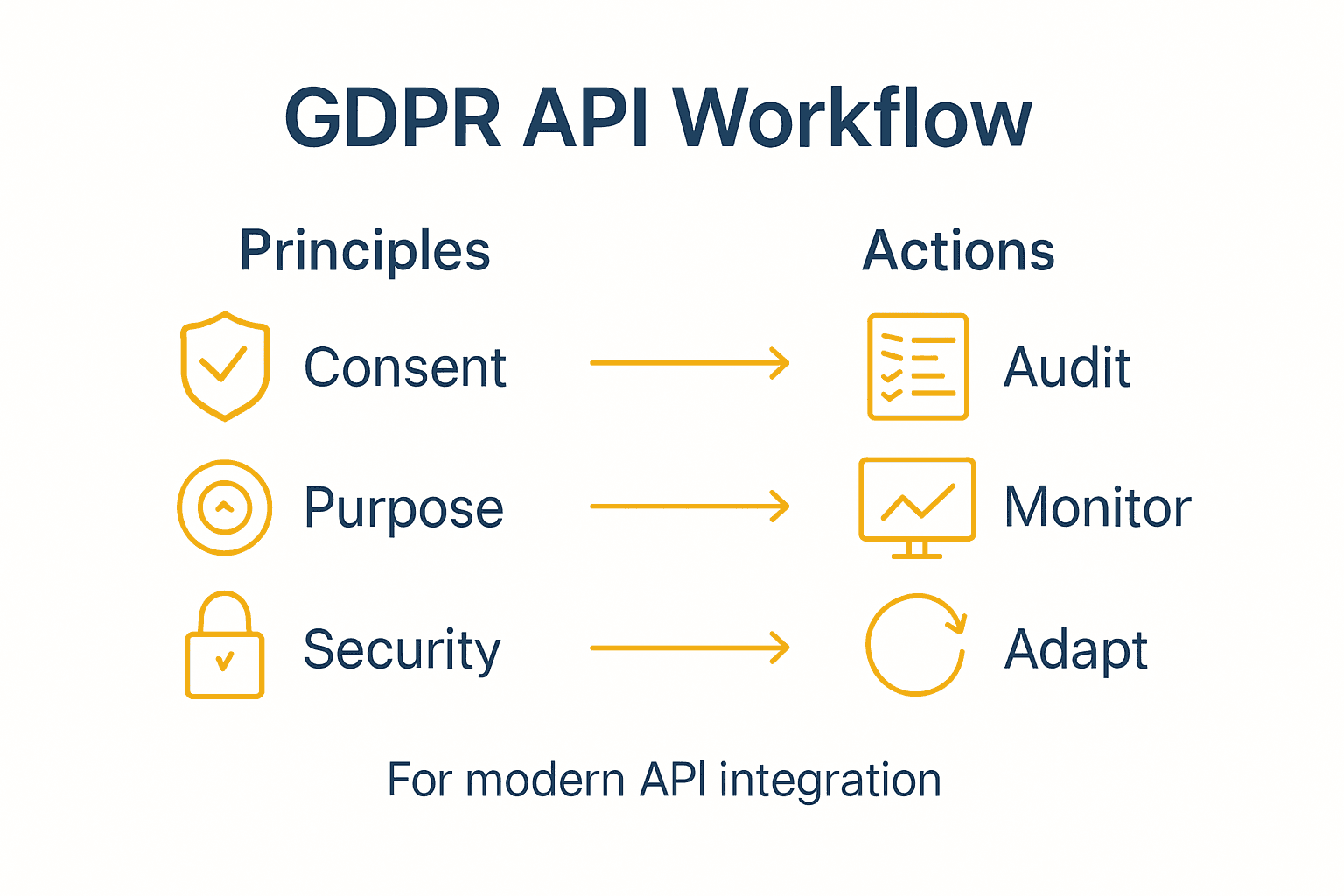
Successful GDPR-compliant APIs require continuous monitoring, regular privacy impact assessments, and dynamic adaptation to evolving regulatory landscapes. Developers must view compliance not as a static checklist, but as an ongoing commitment to protecting user privacy through intelligent, flexible system design.
Pro Developer Tip: Develop an automated compliance dashboard that provides real-time visibility into data processing activities, consent management, and potential privacy risks across your entire API ecosystem.
08Simplify GDPR-Compliant API Integration with ApyHub
Navigating the intricate world of GDPR compliance is a major challenge for developers focused on API integration. From managing explicit user consent to establishing data minimization and purpose limitation, these critical requirements can slow development and increase risk. If you are striving to build secure, transparent, and accountable APIs while ensuring seamless user privacy protections, you need tools that accelerate implementation without sacrificing compliance.
ApyHub's extensive API marketplace offers over 150 ready-to-use APIs that help you embed GDPR principles like consent management, data access controls, and secure data processing directly into your workflows. With reliable solutions for document understanding, data extraction, file security, and much more, developers and teams can reduce the complexity of compliance while speeding up product delivery.
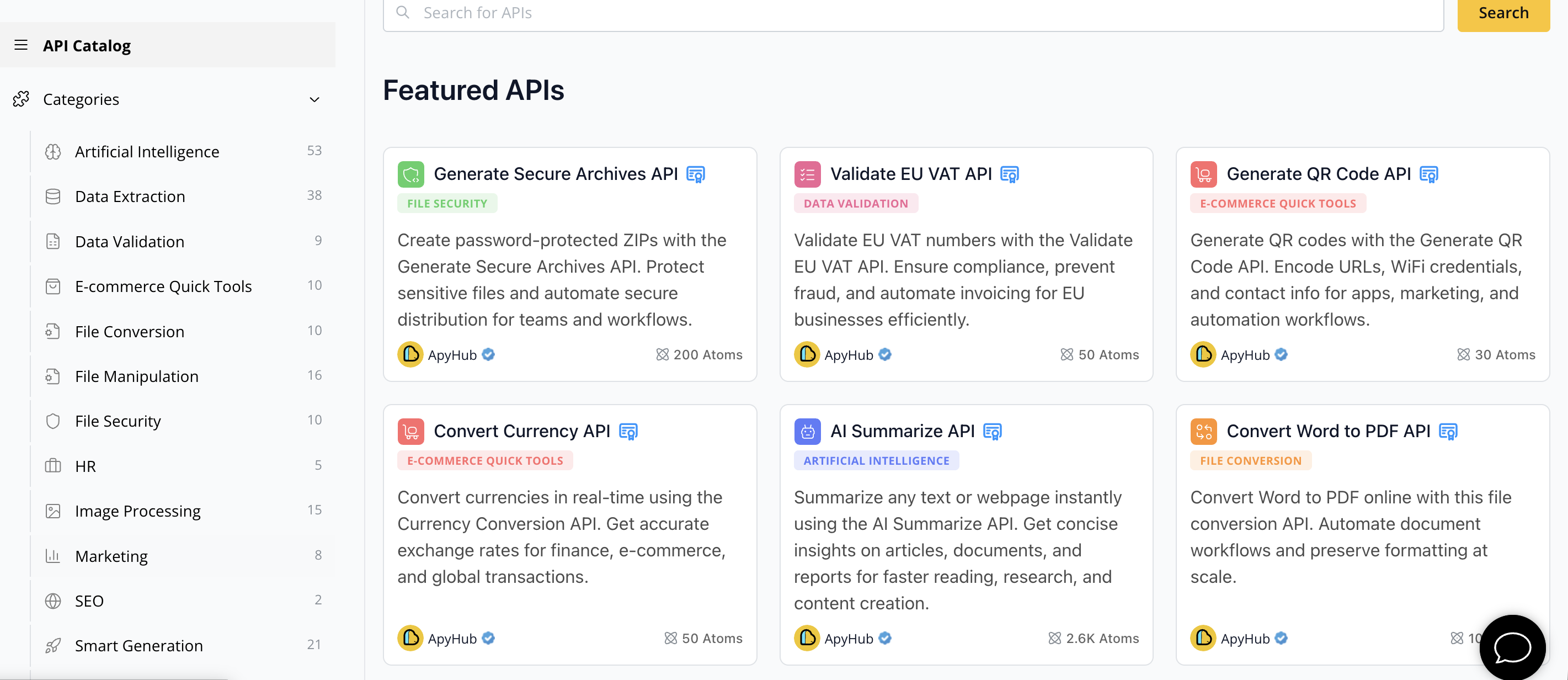
Explore practical integration options that align with GDPR mandates today by visiting ApyHub API catalog. Take control of your API architecture with trusted tools designed to protect user privacy and streamline compliance. Don’t wait until risks become costly. Build GDPR-ready API solutions now with ApyHub.
09Frequently Asked Questions
What is GDPR compliance for APIs?
GDPR compliance for APIs refers to the adherence to the General Data Protection Regulation, which requires developers to implement strict data privacy and protection measures when processing personal data of users. This includes obtaining consent, enabling data access and deletion, and ensuring data security throughout the API's lifecycle.
Why is GDPR compliance important for API developers?
GDPR compliance is crucial for API developers as it not only helps in avoiding significant financial penalties but also builds trust with users. Non-compliance can lead to fines up to 4% of global annual turnover or €20 million. Ensuring compliance also fosters a culture of privacy and accountability.
What are the key principles of GDPR that affect API development?
The key principles of GDPR that impact API development include lawfulness, fairness, transparency, purpose limitation, data minimization, accuracy, integrity and confidentiality, and accountability. These principles guide how personal data should be collected, processed, and stored.
How can developers ensure their APIs are GDPR compliant?
Developers can ensure GDPR compliance by implementing privacy by design principles, maintaining clear data processing records, securing user consent mechanisms, enabling rights for data access and deletion, and conducting regular security assessments to protect personal data.