
API Management Step by Step: Streamline Integration Fast

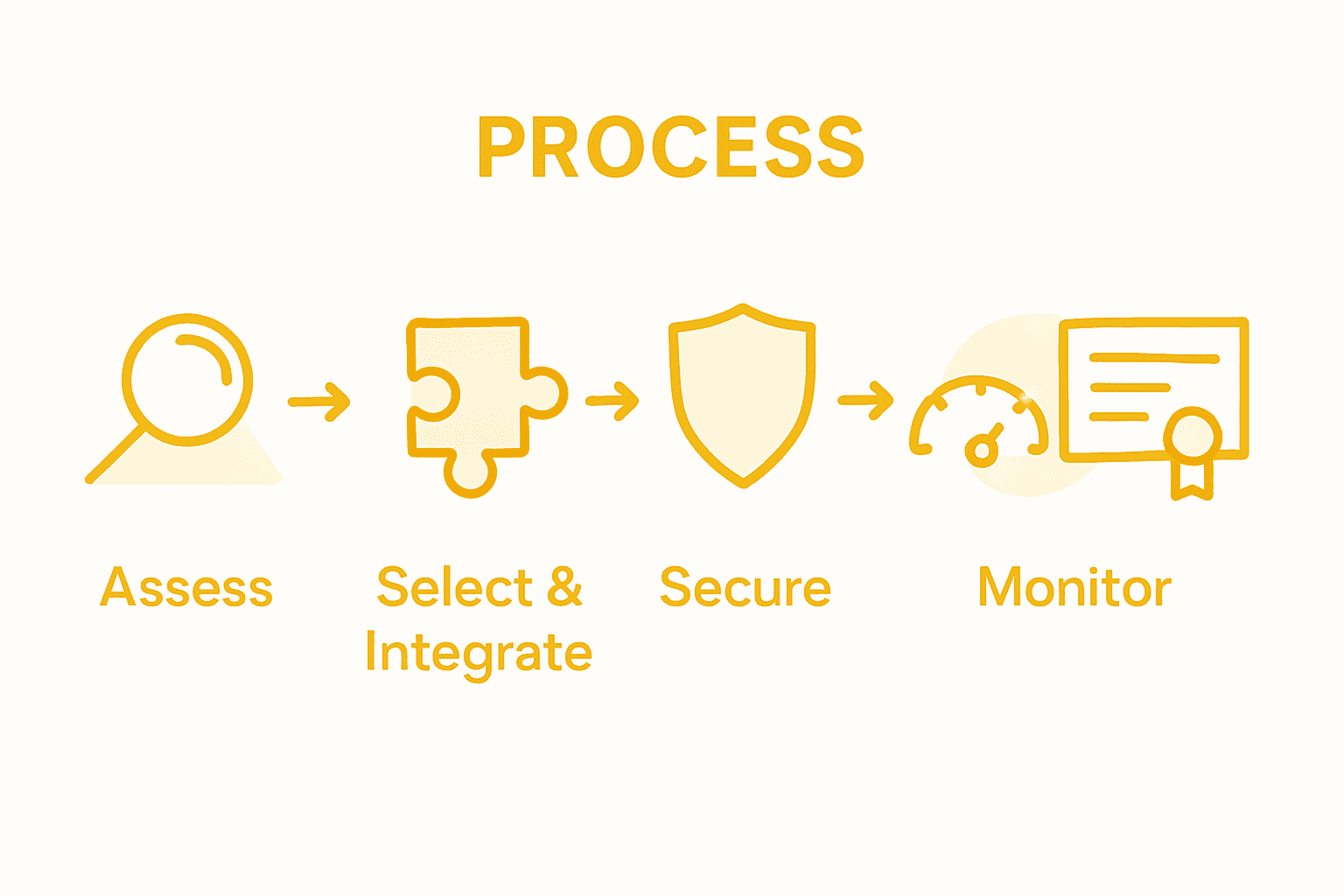
Most advice about American API integration focuses on the technical details, yet nearly 60 percent of failed projects trace back to overlooked setup and security gaps. For any American developer or business, getting API access right sets the stage for smooth system performance and long-term scalability. This guide highlights practical steps that help you assess, implement, and secure API solutions with confidence, ensuring optimal reliability and compliance in your software ecosystem.
01Table of Contents
- Step 1: Assess API Needs And Set Up Access
- Step 2: Select And Integrate Suitable APIs
- Step 3: Configure Authentication And Security
- Step 4: Monitor Usage And Optimize Performance
- Step 5: Verify Compliance And Certification Standards
02Quick Summary
| Key Insight | Explanation |
|---|---|
| 1. Assess specific API needs | Thoroughly analyze your project's functionality requirements to identify necessary API capabilities for proper integration planning. |
| 2. Select reliable and compatible APIs | Create a criteria matrix evaluating APIs based on reliability, performance, and documentation to ensure they fit your technical infrastructure. |
| 3. Implement strong security protocols | Use robust authentication methods like OAuth 2.0 and encryption to protect your API from unauthorized access and data breaches. |
| 4. Monitor API performance continuously | Regularly track performance metrics and usage patterns to identify optimizations and maintain high reliability in your API integrations. |
| 5. Ensure compliance with regulations | Develop a compliance checklist addressing relevant legal standards, and conduct audits to verify adherence to security and data protection protocols. |
03Step 1: Assess API Needs and Set Up Access
Successfully integrating an API begins with a strategic assessment of your technical requirements and access protocols. This critical initial phase determines how smoothly your development process will unfold.
To effectively assess your API needs, start by comprehensively analyzing your project's specific functionality requirements. Systematic research approaches help identify precise API management capabilities that align with your technical infrastructure. Break down your evaluation into key components: data requirements, performance expectations, security parameters, and scalability potential. Consider factors like request volume, expected response times, authentication mechanisms, and potential integration complexity with your existing systems.
Next, develop a detailed access strategy that maps your technical specifications to available API solutions. The development process requires carefully defining API purpose, target audience, and core functionality to ensure optimal integration. Create a comprehensive checklist that includes authentication protocols, rate limiting requirements, data transmission formats, and compliance standards relevant to your industry. Prioritize APIs that offer robust documentation, clear usage guidelines, and flexible access models matching your technical architecture.
Professional Tip: Before finalizing your API selection, always request a sandbox or trial environment to thoroughly test integration capabilities and validate performance metrics against your specific use case requirements.
04Step 2: Select and Integrate Suitable APIs
Selecting and integrating the right APIs is crucial for building robust and efficient software solutions. This step transforms your initial requirements into actionable technical implementation.

Intelligent API recommendation techniques can help streamline your selection process by matching project needs with optimal API solutions. Begin by creating a comprehensive criteria matrix that evaluates potential APIs across multiple dimensions including reliability, performance, documentation quality, scalability, and compatibility with your existing technological infrastructure. Look for APIs that provide clear authentication mechanisms, comprehensive error handling, and well-defined response structures. Pay special attention to the API's rate limits, data transmission protocols, and support for your preferred programming languages.
During the integration phase, carefully review API documentation and implementation best practices to ensure smooth implementation. Start by implementing a small proof of concept that validates core functionality and tests the API's responsiveness. Create modular integration code that allows for easy updates and potential API replacements in the future. Implement robust error handling and logging mechanisms to capture and manage potential integration challenges.
Professional Tip: Always maintain a fallback strategy and consider designing your integration with abstraction layers that allow for quick API provider switching if performance or reliability becomes an issue.
Here is a summary of key factors to evaluate during API selection:
| Evaluation Dimension | Why It Matters | Example Criteria |
|---|---|---|
| Reliability | Ensures stable operation | Uptime guarantees, SLA terms |
| Performance | Supports required speed | Maximum response latency |
| Documentation | Simplifies integration | Clarity, examples provided |
| Scalability | Handles growth | Elastic capacity, throughput |
| Compatibility | Eases system adoption | Supported languages, data formats |
05Step 3: Configure Authentication and Security
Configuring robust authentication and security protocols is fundamental to protecting your API infrastructure and ensuring secure data transmission. This critical step prevents unauthorized access and safeguards sensitive information.
Implementing comprehensive API security guidelines requires a multifaceted approach that addresses potential vulnerabilities across your entire integration ecosystem. Begin by establishing strong authentication mechanisms such as OAuth 2.0 or JSON Web Tokens (JWT) that provide granular access control. Implement multi factor authentication protocols that require multiple verification steps beyond traditional username and password combinations. Encrypt all data transmissions using industry standard protocols like HTTPS and TLS to protect information during transit and prevent potential interception attempts.
Develop a comprehensive access management strategy that includes role based permissions, detailed logging of authentication attempts, and real time monitoring for suspicious activities. Create precise access control lists that define explicit permissions for different user roles, ensuring that each API endpoint has clear and restrictive access parameters. Implement rate limiting and request throttling mechanisms to prevent potential denial of service attacks and protect your system from excessive resource consumption. Regularly audit and update your authentication mechanisms to address emerging security threats and maintain compliance with current cybersecurity best practices.
Professional Tip: Always maintain a dedicated security review process that includes periodic penetration testing and vulnerability assessments to proactively identify and mitigate potential authentication and security risks.
This table outlines common API authentication options and their business impact:
| Authentication Method | Business Impact | Typical Use Case |
|---|---|---|
| API Keys | Quick access, lower security | Internal or low-risk APIs |
| OAuth 2.0 | User delegation, enhanced control | Third-party integrations |
| JWT (JSON Web Tokens) | Scalable, stateless sessions | Mobile or single-page apps |
| Multi-factor Auth | Strongest protection, increased trust | Financial or sensitive data APIs |
06Step 4: Monitor Usage and Optimize Performance
Monitoring your API's performance and usage is essential for maintaining a robust and efficient integration strategy. This step helps you understand how your API is being utilized and identify opportunities for continuous improvement.
Advanced benchmarking techniques for API performance evaluation provide critical insights into optimizing your integration ecosystem. Implement comprehensive monitoring tools that track key performance indicators such as response times, request volumes, error rates, and resource consumption. Set up real time dashboards that offer granular visibility into your API's operational metrics, enabling you to quickly detect and address potential bottlenecks or performance degradation. Utilize distributed tracing mechanisms to understand the complete request lifecycle and pinpoint exact stages where latency or inefficiencies occur.
Develop a proactive optimization strategy that goes beyond simple monitoring. Establish baseline performance benchmarks and create automated alerts for when key metrics deviate from expected ranges. Regularly analyze usage patterns to identify opportunities for caching, request optimization, and potential infrastructure scaling. Implement adaptive rate limiting strategies that dynamically adjust based on current system load and historical usage data. Consider using machine learning algorithms to predict potential performance issues and recommend preemptive optimizations that can enhance overall API reliability and responsiveness.
Professional Tip: Create a dedicated performance tuning schedule where you systematically review and refine your API's performance, treating optimization as an ongoing process rather than a one time task.
07Step 5: Verify Compliance and Certification Standards
Ensuring your API meets rigorous compliance and certification standards is crucial for maintaining trust, security, and regulatory alignment. This step helps you systematically validate your API against industry best practices and legal requirements.
Comprehensive API documentation knowledge mapping reveals the critical importance of thorough compliance verification. Develop a structured compliance checklist that covers key regulatory frameworks such as GDPR, CCPA, HIPAA, and industry specific standards relevant to your domain. Accessibility protocols and compliance requirements should be meticulously evaluated to ensure your API meets inclusive design and data protection guidelines. Conduct a comprehensive audit that examines data handling practices, user consent mechanisms, data retention policies, and cross border data transfer regulations.
Implement a robust certification verification process that goes beyond surface level compliance checks. Engage third party auditors to perform independent assessments of your API infrastructure, focusing on security protocols, data privacy controls, and operational transparency. Maintain detailed documentation of your compliance efforts, including risk assessments, security testing results, and mitigation strategies. Create a transparent certification framework that provides clear evidence of your commitment to regulatory standards and builds trust with potential users and stakeholders.
Professional Tip: Develop a continuous compliance monitoring system that automatically tracks regulatory changes and proactively updates your API to maintain ongoing certification readiness.
08Simplify Your API Integration Journey with ApyHub
Integrating and managing APIs can feel overwhelming when you face challenges like selecting reliable APIs, managing authentication securely, and ensuring compliance. This article emphasizes the importance of thoughtful API assessment, integration, security configuration, performance monitoring, and compliance verification. At ApyHub, we understand these critical pain points and offer a broad marketplace of trustworthy, pre-built APIs that are verified for security and compliance. Our platform reduces your development time and mitigates risks associated with unreliable or non-compliant APIs.
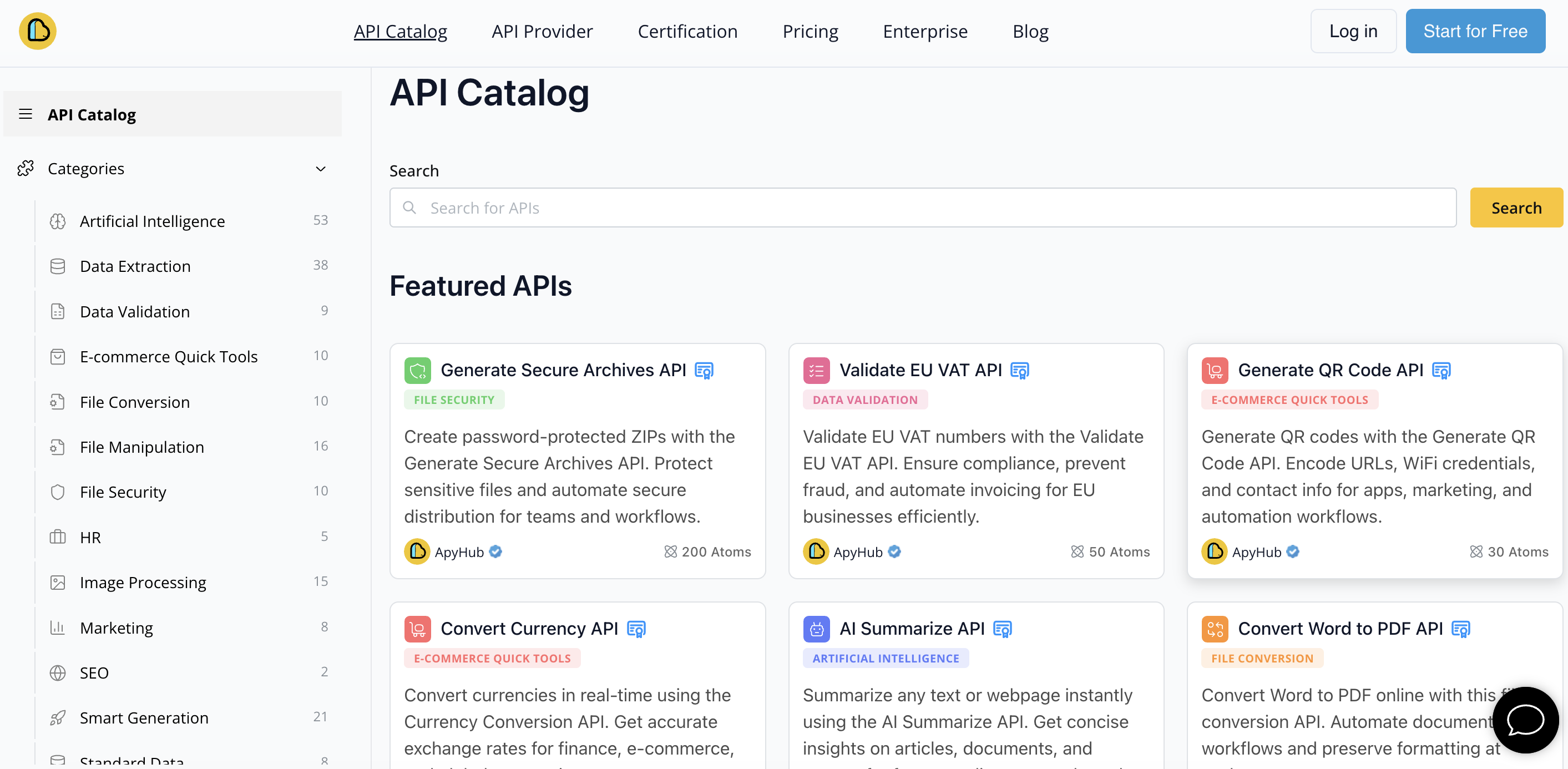
Discover how you can streamline your API management with ApyHub’s curated collection of over 150 APIs ready for fast integration. Benefit from clear documentation, certified security standards, and seamless compatibility to accelerate your software development. Don’t wait to simplify your process and gain complete control over your API ecosystem. Visit ApyHub today to explore solutions that perfectly align with the step-by-step approach outlined in this guide. Start transforming your development workflow now and stay ahead in the fast-paced tech environment.
09Frequently Asked Questions
How do I assess my API needs before integration?
To assess your API needs, analyze your project's functionality requirements, including data requirements, performance expectations, security parameters, and scalability potential. Start by creating a checklist that outlines these criteria to ensure all aspects are covered.
What are the key factors to consider when selecting APIs?
When selecting APIs, focus on reliability, performance, documentation quality, scalability, and compatibility with your existing infrastructure. Create a criteria matrix to evaluate potential APIs and prioritize those that offer clear authentication and error handling.
How can I ensure secure API authentication?
To ensure secure API authentication, implement strong mechanisms such as OAuth 2.0 or JSON Web Tokens. Additionally, use multi-factor authentication and encrypt data transmissions to protect sensitive information during transit.
What should I monitor to optimize my API's performance?
Monitor key performance indicators like response times, request volumes, and error rates to optimize your API's performance. Set up real-time dashboards and create alerts for when these metrics deviate from expected ranges to quickly address potential issues.
How do I verify compliance with regulatory standards for my API?
Verify compliance by developing a structured checklist for regulatory frameworks relevant to your industry, such as GDPR and HIPAA. Conduct audits to assess data handling practices and maintain documentation of your compliance efforts for transparency.
What steps can I take to continuously improve my API integration?
Continuously improve your API integration by regularly reviewing performance metrics and implementing a dedicated performance tuning schedule. Set baseline benchmarks and analyze usage patterns to identify opportunities for optimization.