
Service Security in 2026: Protecting APIs and Data

Cyber attackers cost American businesses over 10 billion dollars annually, exposing the urgent need for stronger digital protections. In 2026, as networks become more complex and distributed, understanding service security is crucial for organizations that rely on modern digital ecosystems. This guide highlights how advanced threat modeling, zero trust frameworks, and adaptive API security are reshaping the way American companies defend their most critical services.
01Table of Contents
- Defining Service Security In 2026 Context
- Modern Api Security Paradigms And Threats
- Compliance Standards And Machine-Readable Certifications
- Real-World Use Cases And Attack Scenarios
- Integrating Secure Apis: Requirements And Pitfalls
02Key Takeaways
| Point | Details |
|---|---|
| Proactive Security Approach | Embrace a proactive, intelligence-driven security model that emphasizes anticipating breaches instead of merely responding to them. |
| Zero-Trust Architecture | Adopt zero-trust network architectures that continuously validate each access request, ensuring context-aware authentication. |
| Adaptive Compliance Strategies | Transition to machine-readable certification frameworks to facilitate real-time security verification and dynamic compliance monitoring. |
| Continuous Threat Detection | Implement comprehensive threat detection mechanisms that leverage AI for real-time monitoring and adaptive responses against emerging threats. |
03Defining Service Security in 2026 Context
Service security in 2026 represents a complex, multi-dimensional challenge that demands sophisticated, proactive strategies far beyond traditional defensive perimeters. As technology ecosystems become increasingly interconnected and distributed, protecting digital services requires a holistic approach that integrates advanced threat detection, adaptive authentication, and robust architectural resilience.
The emerging landscape of service security is fundamentally shaped by comprehensive threat modeling frameworks for microservices architectures, which recognize the intricate vulnerabilities inherent in modern distributed systems. These frameworks emphasize a dynamic, intelligence-driven security model that anticipates potential breaches rather than simply responding to them. Key strategies include:
- Implementing zero-trust network architectures
- Developing granular, context-aware access controls
- Continuous real-time threat monitoring and predictive risk analysis
- Advanced encryption protocols for data in transit and at rest
Moreover, secure API gateway designs are becoming critical infrastructure components that enhance not just security, but also scalability and performance across cloud services. These gateways serve as intelligent intermediaries, providing sophisticated authentication, rate limiting, and threat detection capabilities that can dynamically adapt to emerging security challenges.

Pro Tip for Security Architects: Always design your service security infrastructure with assumption of breach, implementing multi-layered defense mechanisms that can detect, isolate, and mitigate potential threats in real-time before they can propagate across your system.
04Modern API Security Paradigms and Threats
The landscape of API security in 2026 demands a radical departure from traditional defensive models, recognizing that modern digital ecosystems require sophisticated, adaptive protection strategies. With the exponential growth of interconnected services and microservices architectures, security is no longer about building impenetrable walls but about creating intelligent, responsive defense mechanisms.
Researchers have identified critical vulnerabilities that demand comprehensive security approaches. Sophisticated API security techniques now focus on addressing complex threat vectors, including:
- Advanced injection attack prevention
- Robust authentication mechanisms
- Dynamic access control systems
- Real-time threat detection and mitigation
The modern security paradigm emphasizes a proactive threat intelligence model that anticipates and neutralizes potential breaches before they can compromise system integrity. This approach requires continuous monitoring, adaptive authentication protocols, and multi-layered security frameworks that can dynamically adjust to emerging threat landscapes.
Organizations must transition from static, perimeter-based security models to intelligent, context-aware protection strategies that leverage machine learning, behavioral analytics, and predictive risk modeling. Such approaches enable rapid identification and isolation of potential security risks, transforming security from a reactive defensive posture to a strategic, intelligence-driven capability.
Here's a comparison of traditional versus modern API security approaches in 2026:
| Approach | Focus Areas | Strengths | Limitations |
|---|---|---|---|
| Traditional Security | Perimeter defenses, static | Simple implementation, known practices | Lacks adaptability, limited context |
| Modern Security (2026) | Zero trust, real-time intel | Context-aware, adaptive, predictive | Requires advanced tools, expertise |
Security Architect Pro Tip: Implement a zero-trust security model that continuously validates every API request, treating each interaction as potentially compromised and requiring explicit, context-aware authentication before granting access.
05Compliance Standards and Machine-Readable Certifications
The evolving landscape of service security demands a sophisticated approach to compliance that transcends traditional checklist-based certifications. In 2026, organizations must embrace machine-readable certification frameworks that provide transparent, dynamic, and verifiable security standards across complex digital ecosystems.
Security-by-design principles have become fundamental in creating robust API-driven systems, emphasizing comprehensive threat modeling and proactive mitigation strategies. These principles require organizations to:
- Implement continuous security assessment mechanisms
- Develop granular, context-aware compliance protocols
- Create transparent documentation of security practices
- Enable real-time verification of security configurations
Modern compliance standards are increasingly integrating advanced authentication protocols and cryptographic verification methods. Domain-driven API design now incorporates sophisticated security techniques, including OAuth 2.0 and JSON Web Tokens (JWT) with digital signatures, which provide cryptographically secure mechanisms for authenticating and authorizing API interactions.
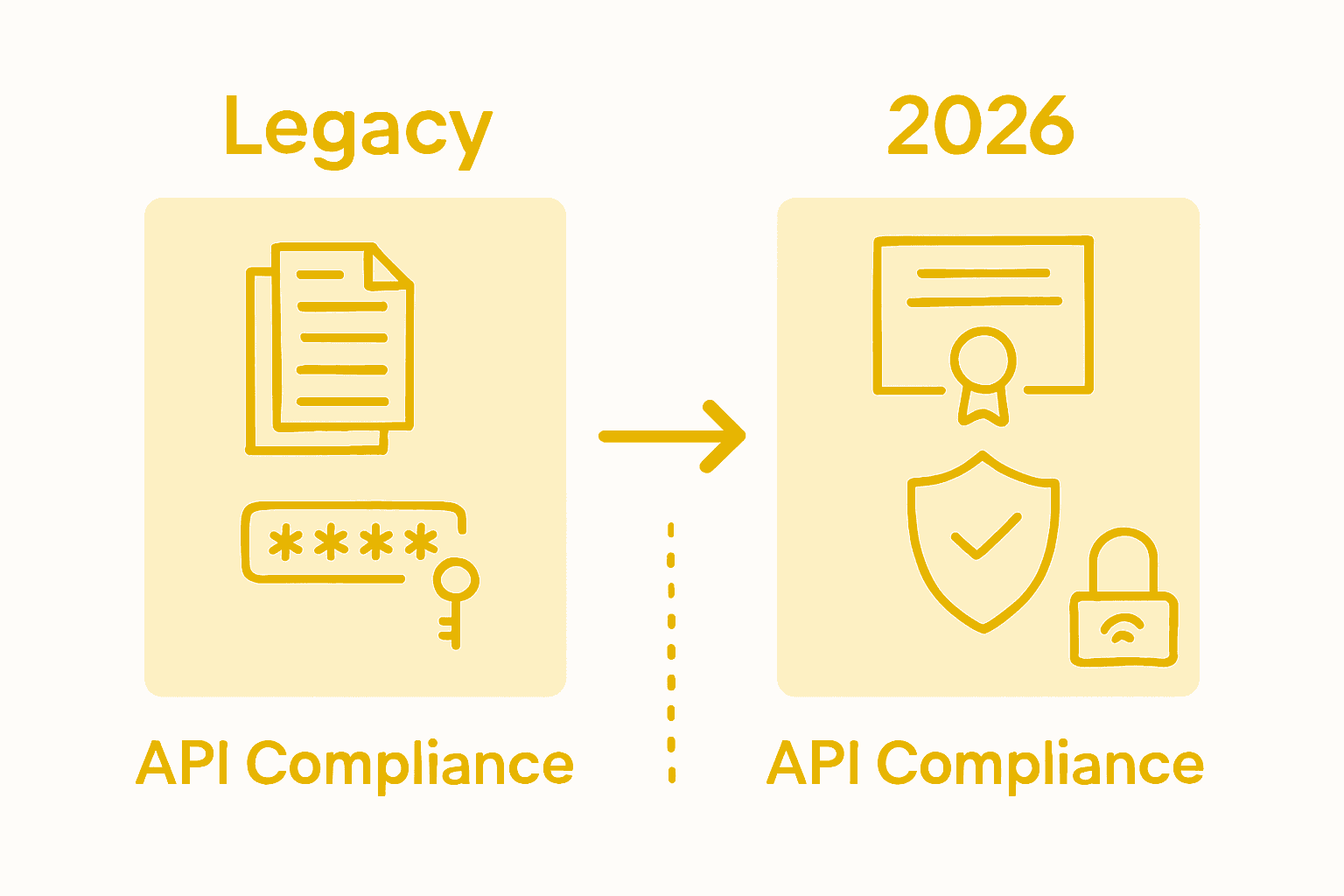
The future of compliance lies in creating adaptive, intelligent certification frameworks that can automatically validate security configurations, detect potential vulnerabilities, and provide real-time insights into an organization's security posture. These machine-readable certifications will transform compliance from a static, periodic assessment to a dynamic, continuous monitoring process.
Compliance Strategy Pro Tip: Develop a comprehensive certification strategy that treats security as an ongoing process, implementing automated tools that can generate machine-readable security reports and instantly identify potential compliance gaps before they become critical vulnerabilities.
06Real-World Use Cases and Attack Scenarios
The digital landscape of 2026 is fraught with increasingly sophisticated cybersecurity challenges that demand intelligent, adaptive defense mechanisms. Modern organizations must anticipate and proactively defend against complex attack vectors that target the vulnerabilities inherent in interconnected API ecosystems.
Advanced machine learning techniques are now being deployed to detect malicious API traffic, utilizing sophisticated Transformer architectures that can identify potential threats with unprecedented accuracy. These innovative detection approaches leverage comprehensive datasets to recognize subtle patterns of potential security breaches, including:
- Anomalous request patterns
- Unauthorized access attempts
- Data exfiltration techniques
- Sophisticated replay attacks
Distributed systems face unique security challenges that require granular, context-aware protection strategies. Fine-grained access control mechanisms have emerged as critical defense tools, enabling organizations to implement stringent authentication and authorization protocols that prevent unauthorized system interactions.
Real-world attack scenarios demonstrate the critical importance of multi-layered security approaches. Sophisticated attackers now employ complex techniques like API parameter tampering, mass assignment exploits, and advanced social engineering tactics that can bypass traditional security perimeters. Organizations must develop adaptive defense mechanisms that can dynamically respond to emerging threat landscapes, combining AI-powered detection, behavioral analytics, and continuous monitoring.
The table below summarizes common API attack scenarios and corresponding AI-driven detection methods:
| Attack Scenario | Detection Method | Example Indicator |
|---|---|---|
| Parameter tampering | Anomaly detection models | Suspicious input value patterns |
| Replay attacks | Sequence analysis with Transformers | Duplicate request timings |
| Unauthorized access | Behavioral analytics | Deviating user roles/actions |
| Data exfiltration | Machine learning traffic analysis | Sudden large data transfers |
Security Response Pro Tip: Implement a comprehensive threat hunting strategy that combines automated AI-driven detection with human expertise, creating a proactive security posture that anticipates and neutralizes potential threats before they can cause significant damage.
07Integrating Secure APIs: Requirements and Pitfalls
The integration of secure APIs demands a comprehensive understanding of modern cybersecurity challenges, moving beyond simplistic implementation strategies toward sophisticated, adaptive protection mechanisms. Developers and architects must recognize that API security is not a one-time configuration but a continuous, dynamic process of threat assessment and mitigation.
Comprehensive threat models for RESTful APIs in microservices environments emphasize multi-layered protection strategies that go far beyond traditional security approaches. Critical requirements for secure API integration include:
- Implementing robust authentication mechanisms
- Developing granular access control systems
- Creating comprehensive API gateway configurations
- Establishing continuous monitoring protocols
- Designing adaptive rate limiting strategies
Advanced API security techniques highlight the complex challenges organizations face when integrating secure APIs within modern technological ecosystems. These challenges demand a holistic approach that combines technical sophistication with strategic risk management, recognizing that each API integration represents a potential vector for potential security breaches.
Successful API integration requires organizations to adopt a proactive security mindset, treating each API endpoint as a potential vulnerability that demands continuous scrutiny. This involves implementing sophisticated authentication protocols, developing comprehensive threat detection mechanisms, and creating adaptive security frameworks that can dynamically respond to emerging technological risks.
API Integration Pro Tip: Treat API security as a continuous process of risk assessment and mitigation, implementing automated security scanning, comprehensive logging, and real-time threat detection mechanisms that can identify and neutralize potential vulnerabilities before they can be exploited.
08Strengthen Your API Security and Compliance with Ready-to-Use Solutions
The article "Service Security in 2026: Protecting APIs and Data" highlights the growing complexity of securing digital services in dynamic, distributed ecosystems. If you are aiming to implement zero-trust architectures, real-time threat detection, or machine-readable compliance certifications, finding trustworthy, pre-built APIs that meet stringent security standards is critical. Avoid the risks and delays of building from scratch or relying on unproven libraries.
At ApyHub, our API marketplace offers over 150 vetted APIs that support adaptive security strategies and compliance transparency backed by machine-readable certifications. Whether you need AI-powered document data extraction, secure identity verification, or advanced file security tools, our solutions help you accelerate development while ensuring robustness and trustworthiness.
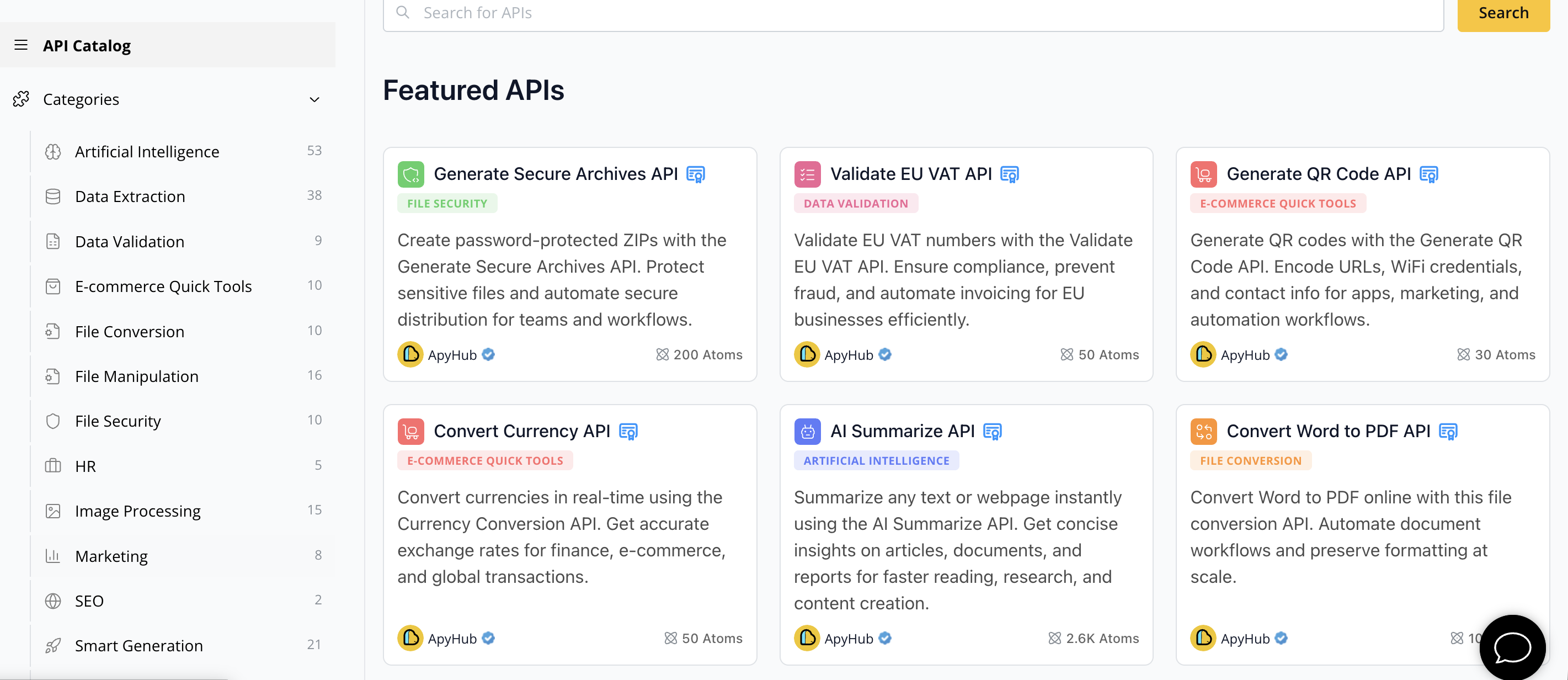
Explore the full range of secure APIs at ApyHub to empower your teams with scalable, compliant, and intelligent API integrations. Start protecting your data and services today with proven technology designed for the modern security challenges outlined in this article.
09Frequently Asked Questions
What are the key strategies for ensuring service security in 2026?
To ensure service security in 2026, organizations should implement zero-trust network architectures, develop granular access controls, conduct continuous real-time threat monitoring, and use advanced encryption protocols for data protection.
How can organizations transition from traditional to modern API security paradigms?
Organizations can transition by adopting intelligent, context-aware protection strategies that utilize machine learning, behavioral analytics, and proactive threat intelligence models for continuous monitoring and dynamic defense mechanisms.
What role do machine-readable certifications play in compliance for digital services?
Machine-readable certifications enhance compliance by providing transparent, verifiable security standards and enabling dynamic, continuous monitoring of security configurations instead of relying on periodic assessments.
What are common attack scenarios targeting APIs, and how can they be detected?
Common attack scenarios include parameter tampering, replay attacks, and unauthorized access. Detection methods involve anomaly detection, sequence analysis, and behavioral analytics to identify irregular patterns and potential threats.