
API Fundamentals: Calls, Payloads, and Best Practices

Every software team knows the frustration of mismatched data or confusing communication between applications. Clear understanding of how API calls and payloads work is the backbone of any fast, secure, and reliable product development process. Mastering these concepts empowers mid-level developers and product teams to build integration workflows that eliminate unnecessary maintenance, keep security airtight, and help applications speak the same language from cloud platform to mobile device.
01Table of Contents
- What Are API Calls And Payloads?
- Types Of API Calls And HTTP Methods
- Defining Payload: Meaning And Role In APIs
- Best Practices For API Integration And Maintenance
- Common API Integration Challenges And Solutions
02Key Takeaways
| Point | Details |
|---|---|
| Understanding API Calls | API calls facilitate data exchange between software systems, consisting of critical elements like HTTP methods, endpoint URLs, headers, and payloads. |
| Types of HTTP Methods | Various HTTP methods (GET, POST, PUT, PATCH, DELETE) each serve specific roles in data management and should be used consistently to ensure clear communication. |
| Payload Importance | The payload is essential for transporting data in API communications, often structured in formats like JSON or XML to ensure efficient information exchange. |
| API Integration Best Practices | Successful API integration requires attention to security, performance monitoring, and clear documentation to manage complexities effectively. |
03What Are API Calls and Payloads?
An API call represents a fundamental communication mechanism between different software systems, enabling applications to request and exchange data seamlessly. When a client application sends a request to an API endpoint, it initiates a transaction designed to retrieve, create, update, or delete specific information. Sophisticated API interactions involve multiple components working together to facilitate smooth data transmission.
At its core, an API call consists of several critical elements. The HTTP method specifies the type of action (GET, POST, PUT, DELETE), while the endpoint URL identifies the precise server location for processing the request. Additionally, headers provide metadata about the request, including authentication tokens, content types, and other configuration details. The payload serves as the primary data container, transporting the actual information being sent or requested between systems.
Payloads can vary significantly depending on the API's design and purpose. They might include JSON, XML, or form-encoded data structures that encapsulate complex information. A typical payload could represent user details, transaction records, configuration settings, or any structured data required for the specific API interaction. The payload's structure and content are carefully defined by the API's documentation, ensuring predictable and consistent communication between different software applications.
Pro tip: Always validate your payload structure against the API documentation to prevent transmission errors and ensure smooth integration.
04Types of API Calls and HTTP Methods
HTTP methods represent the fundamental communication protocols that define how data is exchanged between clients and servers. Standard API interactions utilize five primary methods: GET, POST, PUT, PATCH, and DELETE. Each method serves a unique purpose in managing data transactions, enabling developers to create robust and flexible web services.

The GET method retrieves information without modifying server data, making it ideal for fetching static content or querying databases. POST methods create new resources by sending data to the server, typically used for submitting forms or generating new database entries. PUT replaces entire existing resources completely, while PATCH allows partial updates to specific data fields. The DELETE method removes specified resources from the server, providing comprehensive control over data management.
Understanding the nuanced differences between these HTTP methods is crucial for building efficient and predictable API architectures. RESTful design principles recommend using these methods consistently, ensuring that each request follows clear semantic guidelines. For instance, GET requests should remain idempotent (producing the same result regardless of repetition), while POST requests typically trigger state changes on the server. Developers must carefully select the appropriate method based on their specific data manipulation requirements and API design goals.
Pro tip: Always document and communicate the specific behavior of each HTTP method in your API to prevent unexpected client-side interactions and maintain clear interface expectations.
Here's a quick comparison of HTTP methods used in API calls:
| HTTP Method | Primary Purpose | Typical Use Case | Idempotent Behavior |
|---|---|---|---|
| GET | Retrieve data | Fetching user details | Yes, safe to repeat |
| POST | Create new resource | Submitting a new order | No, can cause duplicates |
| PUT | Replace entire resource | Overwriting a user's profile | Yes, same result always |
| PATCH | Update part of resource | Changing one field in a profile | Yes, partial update |
| DELETE | Remove a resource | Deleting a product from catalog | Yes, resource is removed |
05Defining Payload: Meaning and Role in APIs
A payload serves as the critical data transport mechanism within API communications, enabling applications to exchange structured information efficiently. [Payload mechanics] involve carrying meaningful content during requests and responses, functioning as the primary vehicle for transmitting user data, configuration settings, and complex transaction details between software systems.
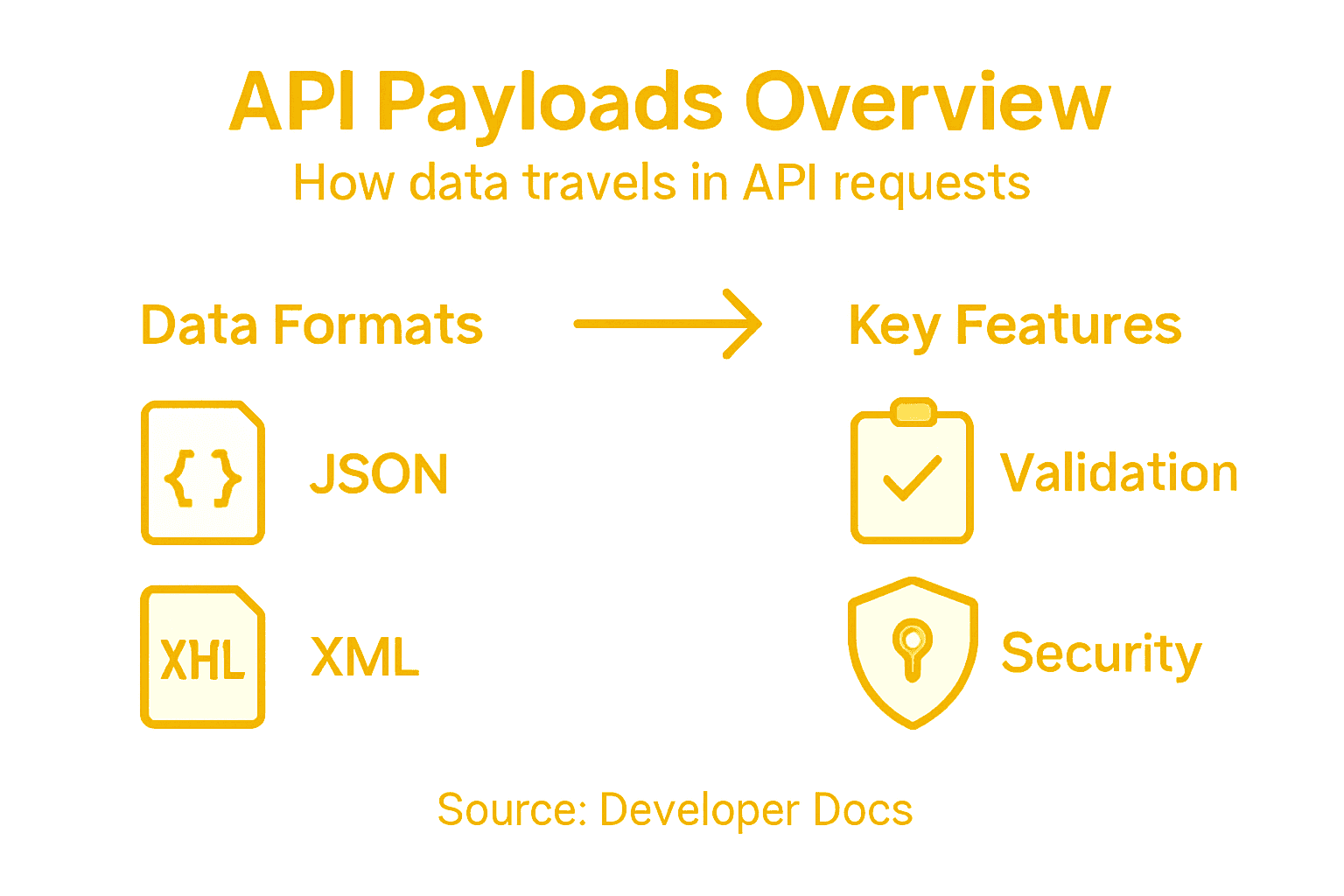
Payloads can be structured using multiple data formats, with JSON emerging as the most prevalent and versatile option. Other common formats include XML and form-encoded data, each offering unique advantages for different communication scenarios. The payload's structure determines how information is organized, processed, and interpreted by receiving systems, making it essential for developers to design clean, consistent, and well-documented payload architectures that facilitate seamless data exchange.
The complexity and composition of payloads vary widely depending on specific API requirements. Some payloads might contain simple key-value pairs representing user credentials, while others could include nested objects representing intricate data models with multiple layers of information. Effective payload design requires careful consideration of data types, size limitations, compression techniques, and security protocols to ensure optimal performance and protect sensitive information during transmission.
Pro tip: Always validate and sanitize payload data before processing to prevent potential security vulnerabilities and ensure robust API communication.
The table below summarizes common API payload formats and their key characteristics:
| Format | Typical Use | Key Characteristics |
|---|---|---|
| JSON | Web APIs, mobile apps | Human-readable, lightweight |
| XML | Legacy and enterprise APIs | Strict structure, extensible |
| Form-encoded | Simple web forms | Easy browser support, less flexible |
06Best Practices for API Integration and Maintenance
Successful API integration requires a strategic approach that balances technical precision with comprehensive planning. API integration strategies demand meticulous attention to documentation, version control, security protocols, and performance monitoring. Developers must develop robust frameworks that enable seamless communication between different software systems while maintaining flexibility and scalability.
Security represents a critical cornerstone of effective API management. Implementing authentication mechanisms like OAuth 2.0, utilizing API gateways, and establishing comprehensive access control protocols protect sensitive data and prevent unauthorized system interactions. Regular security audits, encryption of data transmissions, and implementing rate limiting help mitigate potential vulnerabilities and ensure consistent system integrity. Developers should also prioritize comprehensive error handling strategies that provide clear, actionable feedback without exposing sensitive system details.
Maintaining API performance requires continuous monitoring and proactive optimization. Developers should leverage analytics tools to track response times, error rates, and system load, enabling rapid identification and resolution of potential bottlenecks. Automation plays a crucial role in this process, with continuous integration and deployment pipelines helping to streamline testing, reduce human error, and ensure consistent API reliability. Establishing clear communication channels with API providers and maintaining up-to-date documentation further supports smooth long-term integration and reduces potential friction points.
Pro tip: Implement comprehensive logging and monitoring systems that track API performance metrics in real-time, allowing for immediate detection and resolution of potential issues.
07Common API Integration Challenges and Solutions
API integration presents developers with a complex landscape of technical challenges that require strategic planning and robust problem-solving skills. API integration challenges encompass a wide range of technical and operational obstacles, from authentication complexities to documentation inconsistencies that can derail even the most well-designed software projects.
Authentication and security represent primary integration hurdles, with developers frequently encountering token management issues, inconsistent security protocols, and complex authorization workflows. Implementing automated token refresh mechanisms, utilizing standardized authentication frameworks like OAuth 2.0, and developing comprehensive access management strategies can mitigate these risks. Robust error handling becomes crucial, requiring developers to design flexible systems that can gracefully manage unexpected response scenarios while maintaining system stability and preventing potential cascading failures.
Scalability and performance optimization emerge as critical considerations in successful API integration. Developers must anticipate potential bottlenecks by implementing intelligent caching strategies, rate limiting mechanisms, and comprehensive monitoring systems. Proactive testing frameworks, including simulated high-load scenarios and detailed integration tests, help identify potential performance constraints before they impact production environments. Maintaining clear communication channels with API providers, staying updated on version changes, and developing modular integration architectures further enhance the reliability and adaptability of complex API ecosystems.
Pro tip: Develop a comprehensive API integration playbook that documents authentication processes, error handling strategies, and fallback mechanisms to ensure consistent and reliable system interactions.
08Accelerate Your API Integration with Ready-to-Use Solutions
Understanding the nuances of API calls, payloads, and best practices is essential, yet building every component from scratch can slow down your development. If you want to overcome challenges like complex authentication, payload validation, and performance optimization quickly and effectively, leveraging a trusted API marketplace can be transformative.
At ApyHub, we offer over 150 reliable APIs across diverse use cases from commerce and AI-powered document understanding to file conversion and SEO tools. These APIs are designed to help developers and teams reduce integration headaches and focus on what matters most – shipping faster and maintaining seamless workflows. Explore practical implementation patterns and ready APIs that handle common tasks such as data extraction, payload management, and error handling to make your projects scalable and secure.
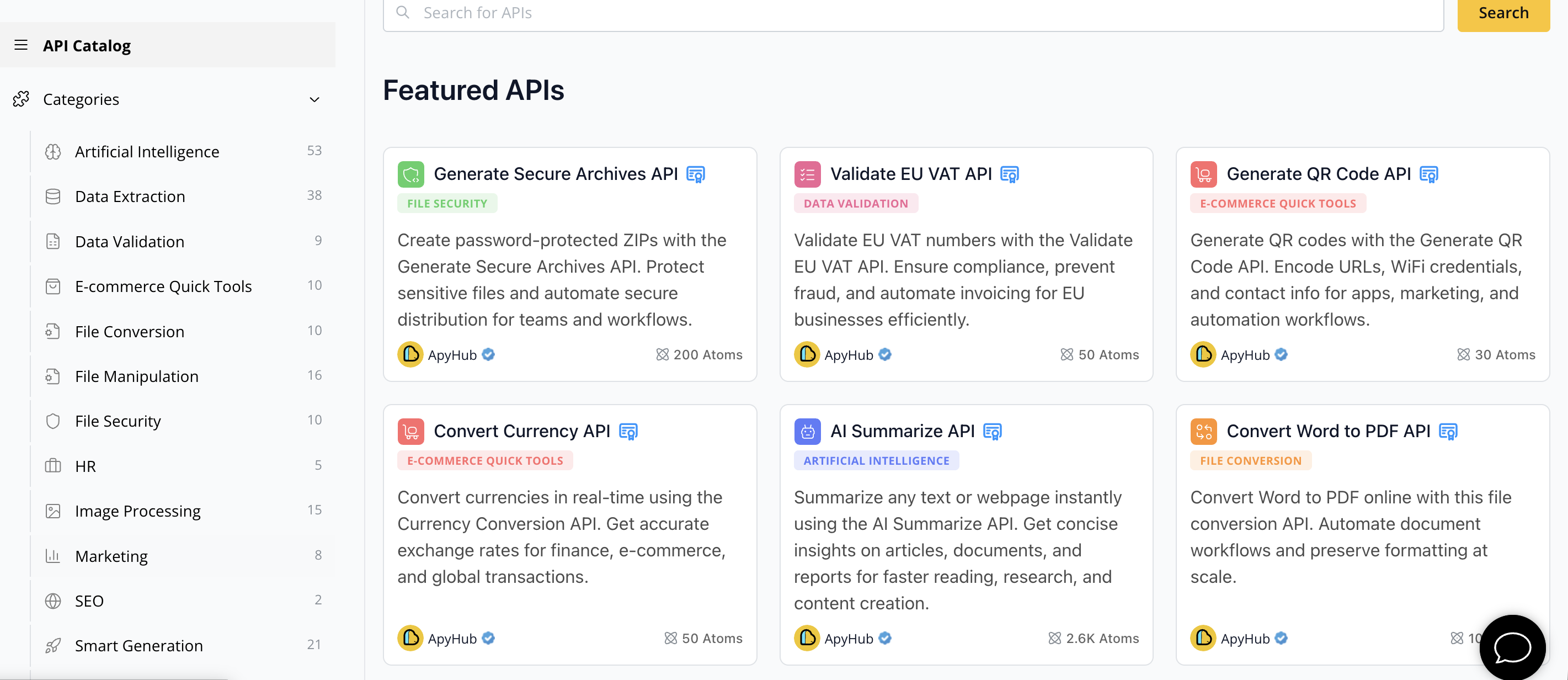
Discover how you can simplify your API infrastructure with our extensive catalog. Visit the ApyHub API Catalog to find solutions that align with best practices featured in this guide. Empower your team with proven APIs that speed up integrations and reduce maintenance complexity today.
09Frequently Asked Questions
What is an API call?
An API call is a communication request made between different software systems, enabling applications to exchange data by engaging with an API endpoint to retrieve, create, update, or delete information.
What is a payload in an API context?
A payload is the data portion of an API request or response that carries meaningful information, such as user details or configuration settings, structured in formats like JSON or XML.
What are the main HTTP methods used in API calls?
The main HTTP methods used in API calls are GET (retrieve data), POST (create data), PUT (replace data), PATCH (update part of data), and DELETE (remove data). Each method serves a distinct purpose in managing data transactions.
What are some best practices for API integration?
Best practices for API integration include following detailed documentation, maintaining version control, implementing robust security measures, optimizing performance through continuous monitoring, and ensuring comprehensive error handling strategies.